 Image 1 of 1
Wanna get hands on designing creative and critical technologies after hours?
• February - May 2026, evenings 18-21h
• Each course is one evening per week
• In-Person at School of Machines in Berlin, Mitte
• Small class of participants
• Certificate of Completion
• No prior experience necessary
Choose from two courses
Tuesdays: Creative Coding & Electronic Mischief
Thursdays: Homegrown Tools & Self-Hosted Infrastructures
course
description
School of Machines After Hours is a 14-week university level program with two courses to choose from, each consisting of lectures, class discussions, and hands-on workshopping supplemented by optional readings. After Hours is choose your own adventure: sign-up for one of two complementary courses, or enroll in both for the complete experience (see below for fee information).
Course 1: Creative Coding & Electronic Mischief led by contemporary artist and activist Grayson Earle focuses on media making, electronics and creative misuses of technology for art and activism.
Course 2: Homegrown Tools & Self-Hosted Infrastructures led by media artist and educator Sarah Grant focuses on developing your own digital tools - from self-hosted servers, networks and AI systems to custom scripts and alternative infrastructure.
By the end of the program, everyone will have worked toward developing a collection of interactive artworks and/or self-hosted tools and infrastructure that complements their practice. Together in each course, students will each develop a personalized toolkit that may consist of custom hardware, electronics, physical controllers, servers, networks, AI systems, communication tools, and new ways of thinking about digital creativity and autonomy.
Class time will consist of discussions and hands-on workshop sessions. Lectures will provide context on movements toward technological self-sufficiency and the politics of infrastructure. Workshop sessions will serve as practical introductions to the software and hardware needed for building our own systems. Outside of class, we will have suggested readings to help deepen our understanding of concepts learned in class and guest lectures which students from both courses are invited to attend.
Throughout the course, students will have the opportunity to ask questions, share ideas, and receive feedback on their work as we progress. Ultimately the goal is to gain technical skills and a conceptual framework to build, maintain, and share digital tools for our creative and activist practices alongside a new community of friends and future collaborators.
In this program you’ll explore
Creative and critical perspectives on visual, interactive, electronic and networked communications
Hands-on individual and collaborative group work
Critical and conceptual development of projects for group public exhibition at programs end
A variety of guest speakers with varying perspectives and relevant practices around critical tools and technologies
Mentorship, project feedback and professional development for artists and creatives
Use of School of Machines/Make-Believe Studio workspaces and equipment outside of class hours
An opportunity for personal and political introspection and self-reflection with others
An amazing network and community of like-minded creative beings and potential future collaboration
courses
Creative Coding & Electronic Mischief
Tuesdays, 3. February - 8. May
This course takes a practical approach to media making, focusing on the creative misuse of technology for art and activism. The goal is to become critical makers who understand and can manipulate the systems around us. Over fourteen weeks, the curriculum builds toward a final project where students create works that blur the boundaries between digital and physical space. We will bridge the gap between hardware and software starting with basic electronics and 3D fabrication, and evolving into complex systems where the physical world speaks to the virtual. We will avoid corporate software in favor of a DIY/open-source framework, building our own tools around our ideas.
Learning Objectives
Develop a critical maker mindset to deconstruct and manipulate technological systems.
Learn to build custom physical instruments and controllers from scratch.
Gain the coding literacy required to creatively use and misuse digital tools.
Understand the workflow between physical inputs (sensors) and digital outputs (software/audio/video).
Create projects that facilitate bidirectional communication between the physical and virtual worlds.
Core Technical Areas
Physical computing and electronics (Arduino, sensors, actuators).
Digital fabrication (3D modeling and 3D printing).
Creative coding and software integration.
Communication protocols (MIDI, Serial, network messaging).
Projection mapping and video manipulation.
Automation and bot creation (Discord API).
General internet mischief and open-source tool usage.
Weekly Semester Plan
Weeks 1-2: Foundation & Arduino Basics
Topics: Introduction to physical computing; Arduino hardware (microcontrollers, circuits); Digital/Analog I/O; Reading sensors (light, motion, temp); Debugging.
Goal: Understand how microcontrollers bridge the digital and physical worlds.
Deliverable: A simple sensor-based project (e.g., light-reactive device).
Weeks 3-4: Movement & Physical Feedback
Topics: Motors, servos, and actuators; PWM for variable control; Building simple mechanical systems.
Goal: Control mechanical systems from code and design simple mechanisms.
Deliverable: A kinetic sculpture or interactive mechanical device.
Weeks 5-6: 3D Design & Fabrication
Topics: Introduction to 3D design; Designing custom housings for electronics; Slicing and 3D printing workflow; Integrating hardware with printed parts.
Goal: Move from software simulation to physical prototype.
Deliverable: Custom 3D printed housing or component integrated with electronics.
Weeks 7-8: The Bridge — MIDI & OSC
Topics: Communication protocols; Arduino as a MIDI controller; Sending sensor data to DAWs (Ableton/Logic) or soft synths; Open Sound Control (OSC).
Goal: Turn raw sensor data into expressive signals for performance.
Deliverable: A custom sensor-based MIDI controller or instrument.
Weeks 9-10: Visual Systems & Projection Mapping (TouchDesigner)
Topics: Introduction to TouchDesigner; Projection mapping onto 3D objects; Receiving OSC/MIDI data in TouchDesigner to trigger visuals; Creating reactive installations.
Goal: Bridge digital performance with physical space using projection.
Deliverable: A projection-mapped installation triggered by physical sensors.
Weeks 11-12: Capstone & Networked Mischief
Topics: Coding for the net; Bidirectional communication (Real world -> Internet); Final project assembly and polishing.
Goal: Conceptualize activism/intervention through networked systems.
Deliverable: Final Project: An interactive installation using at least three technologies (e.g., Arduino sensors triggering a TouchDesigner projection based on Discord chat activity).
Homegrown Tools & Self-Hosted Infrastructures
Thursdays, 5. February - 8. May
This course explores how to develop your own digital tools - from self-hosted services to custom scripts and alternative infrastructure. Moving beyond being passive users of corporate platforms, we'll learn to set up our own servers, networks, AI systems, and communication tools. Questions around control of data, software, hardware and infrastructure will be tied to larger themes of autonomy, resilience, and community self-sufficiency. An ethos of artistry and activism will be infused throughout as students develop their own toolkit of custom tools, self-hosted services, and alternative infrastructure.
Learning Objectives
Gain foundational command line skills and systems administration knowledge
Learn to set up and manage your own web servers and self-hosted applications
Understand how to run your own local AI/LLM infrastructure
Build alternative communication networks (mesh, peer-to-peer, radio)
How to identify which tools serve your practice and assemble them into your own personalized toolkit
Core Technical Areas
Command line interface and basic scripting
Self-hosted web servers and applications (Yunohost)
Local knowledge management (Obsidian)
Self-hosted LLMs (Ollama) and integration strategies
Mesh networking (Meshtastic)
Peer-to-peer protocols (IPFS)
Radio communication and alternative networks
Embedded computing with Raspberry Pi
Additional tools and topics based on student needs and collective curiosity
Weekly Semester Plan
Weeks 1-2: Command Line Basics
Topics: Introduction to self-hosted infrastructure; terminal navigation and file system; permissions and environment variables; bash scripting fundamentals; automation with cron; debugging in the terminal.
Goal: Understand how to control systems without a GUI and automate repetitive tasks.
Deliverable: A collection of bash scripts that automate something in your workflow (backup, file organization, system monitoring).
Weeks 3-4: Self-Hosted Web Server
Topics: Server concepts and architecture; Yunohost installation and configuration; DNS basics; deploying web applications; user management and permissions; backup and basic security.
Goal: Run your own server and deploy applications you control.
Deliverable: A working Yunohost server hosting at least one application (blog, wiki, file share, or portfolio site).
Weeks 5-6: Mesh Networking & Off-Grid Communication
Topics: LoRa radio fundamentals; Meshtastic setup and configuration; mesh network topology; MQTT protocol; bridging mesh messages to your web server; designing for resilience.
Goal: Build communication infrastructure that doesn't depend on the internet.
Deliverable: A Meshtastic node that sends sensor data or messages to your web server via MQTT.
Weeks 7-8: Self-Hosted AI
Topics: Local LLM concepts; Ollama installation and model management; running inference locally; API integration; connecting LLM to web interfaces; prompt design for personal tools.
Goal: Run AI on your own hardware without cloud dependencies.
Deliverable: A locally-hosted LLM accessible via web UI or integrated into your server (e.g., chatbot, writing assistant, or custom tool).
Weeks 9-10: Peer-to-Peer & Local-First Tools
Topics: Decentralization concepts; IPFS installation and content addressing; pinning and persistence strategies; Obsidian for knowledge management; local-first philosophy; sync without cloud services.
Goal: Distribute content and manage knowledge without centralized platforms.
Deliverable: A personal knowledge base in Obsidian plus content published and accessible via IPFS.
Weeks 11-12: Integration & Networked Autonomy
Topics: Raspberry Pi deployment; connecting systems together; documentation practices; maintenance and sustainability; conceptualizing autonomy through infrastructure.
Goal: Assemble a personal toolkit and articulate its role in your practice.
Deliverable: Final Project: An integrated system using at least three technologies from the course (e.g., a Raspberry Pi running a web server that receives mesh network data and queries a local LLM, or an IPFS-hosted site updated via Obsidian and announced over Meshtastic).
who are these
classes for?
This program is for you if you want to understand how the systems you rely on actually work, to explore the creative potential of these technologies in your practice, or gain the skills to build and maintain alternatives that serve your communities. No previous experience is necessary, although a willingness to go behind the GUI and get your hands dirty will help you get the most out of this course.
Plan for approximately 5 - 8 hours per week including class time, readings, and project development.
about this IRL program
Classes are 'in-person' meaning that they will be taking place at School of Machines in Berlin, Mitte. Students are invited to use the School of Machines studio workspace outside of class hours for school work, project completion, and collaboration during operational hours from 10am - 6pm daily. Additional hours can be arranged.
If you would like to book a short 15 minute interview to have some questions answered before signing up, email us your availability here.
Additionally, have a look at the program brochure here.
about fees
We strive to make all of our offerings accessible to as many people as possible and to counterbalance economic injustice, we have several payment tiers. While we feel this is important and necessary, it may lead to confusion, so hopefully this helps:
If you are making art full-time or are a full-time student then sign-up as an artist/student!
If you are paying VAT, for your own insurance, and working to find gigs to survive, then sign-up as a freelancer.
If you have a full-time job, have your insurance paid for by an employer, or have no financial struggle to make ends meet, then sign-up as professional.
Scholarships are reserved for women*, BIPOC, and LGBTQ+ who otherwise would be unable to attend due to financial hardship.
You may qualify for financial hardship if you have significant debt, have significant medical expenses not covered by insurance, have educational expenses, or receive public assistance.
You may not qualify for financial hardship if you own the home you live in; have investments, retirement accounts or inherited wealth; travel recreationally; have access to family resources in times of need; have received funding (e.g., from an employer or a grant) for continuing education; or work part-time (or not at all) by choice.
We ask you to assess yourself sincerely. We are a small organisation with no outside funding and, like many, we are also in survival mode. We depend on tuition fees for reimbursing class instructors, space fees, and operational costs, so we appreciate everyone reading the guidelines above carefully before selecting a tier. We greatly appreciate your consideration! <3
Credit and gratitude to Tamera for lots of this wording.
Early-Bird Pricing
Enroll by January 12, 2026 (extended deadline!), to secure the following savings:
Full-Time Artists, Students, and Freelancers: €200 off
Professionals and Generous Supporters: €100 off
10% discounts are offered if:
you sign up for both evening courses.
you sign-up together with a friend/colleague.
If signing up together with a friend/colleague, use the discount code TOGETHER10 at checkout.
For specific questions, please email us and we'll get back to you as soon as we can.
about
scholarships
We are happy to be offering two hardship scholarships, one scholarship per course for this 14-week professional program. These scholarships are reserved for women, BIPOC, and LGBTQ+ who would otherwise be unable to attend due to the cost of the program. Application is below! The deadline to apply is Monday, 22. December. Application below.
fees
One-Time Payment
Payment options and checkout are accessible from the top of the page.
Fees per Individual Course
Full-Time Artist / Student
€1,550 €1,350
Freelancer
€1,650 €1,450
Professional
€1,750 €1,650
Generous Supporter
€1,850 €1,750
Fees for Both Courses (10% Discount)
Full-Time Artist / Student
€2,790 €2,430
Freelancer
€2,970 €2,610
Professional
€3,150 €2,970
Generous Supporter
€3,330 €3,150
Monthly Payments
Prices are shown per installment.
A €100 administrative fee applies to monthly payment plans.
Fees are paid in 5 installments. The first installment is the deposit due at enrollment. The remaining 4 installments are charged automatically on the first of each month between February and May 2026.
Fees per Individual Course
Full-Time Artist / Student
€330 €290 × 5
Enroll Now ↗
Freelancer
€350 €320 × 5
Enroll Now ↗
Professional
€370 €350 × 5
Enroll Now ↗
Generous Supporter
€390 €370 × 5
Enroll Now ↗
Fees for Both Courses (10% Discount)
Full-Time Artist / Student
€578 €506 × 5
Enroll Now ↗
Freelancer
€614 €542 × 5
Enroll Now ↗
Professional
€650 €614 × 5
Enroll Now ↗
Generous Supporter
€685 €650 × 5
Enroll Now ↗
meet the profs
Sarah Grant
Media Artist, Educator
Sarah Grant is an American media artist and educator based in Berlin at the Weise7 studio. She is also the Visiting Professor of New Media at the Kunsthochschule Kassel and founder of the interactive media studio Cosmic.Berlin. She holds a Bachelors of Arts in Fine Art from UC Davis and a Masters in Media Arts from New York University's Interactive Telecommunications Program.
Her teaching and arts practice focuses on the electromagnetic spectrum and computer networks, considering these media as artistic material, habitat, and political landscape. Since 2015, she has organized the Radical Networks conference in New York and Berlin, a community event and arts festival for critical investigations and creative experiments in telecommunications. She is currently a Digital Fellow at the Weizenbaum-Institut in Berlin.
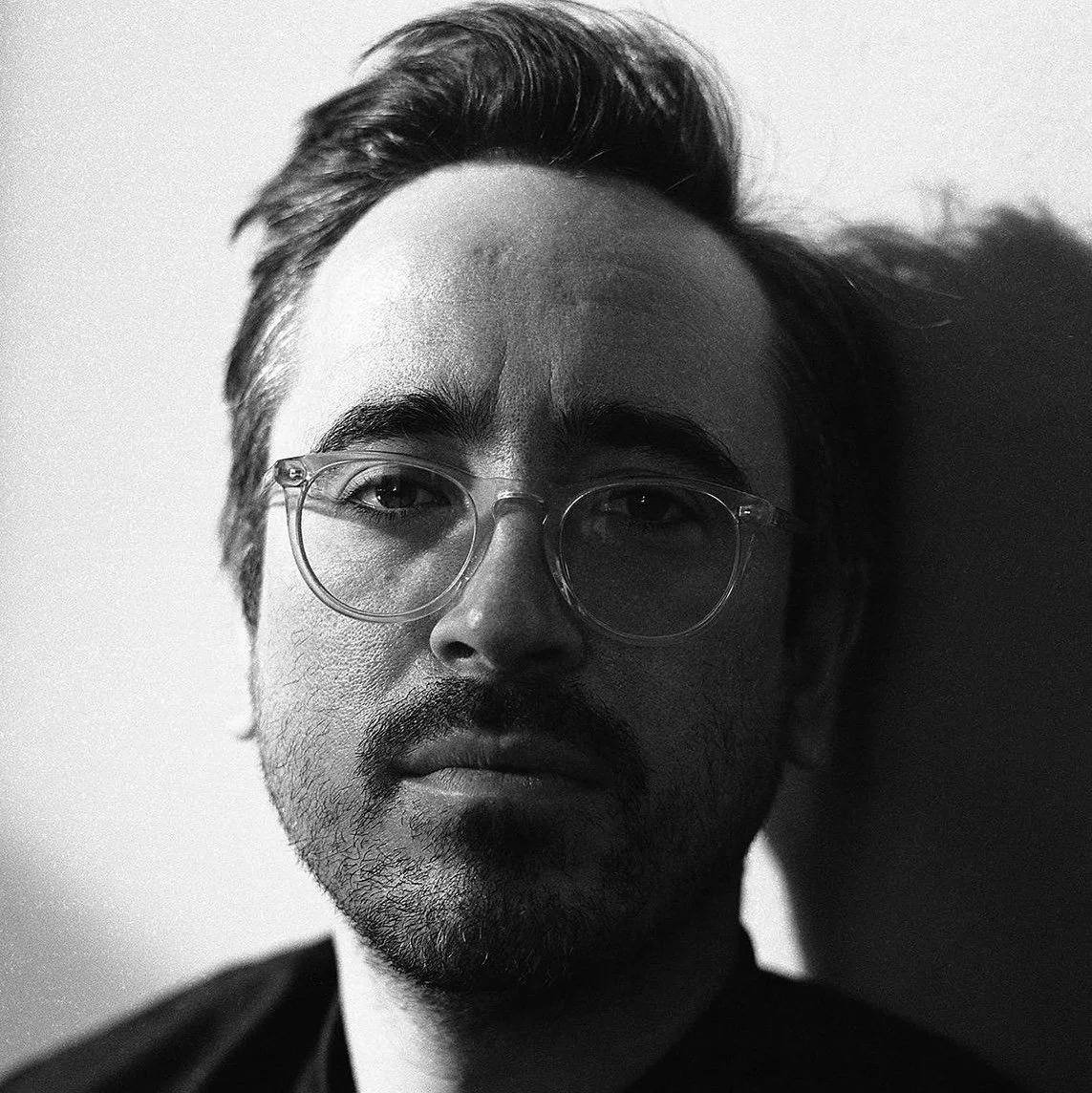
Grayson Earle
Contemporary Artist, Activist
Grayson Earle is a contemporary artist and activist from the United States. His work deals with the role that digital technologies and networks play in protest and political agency. He is known for his guerrilla video projections as a member of The Illuminator, a guerrilla video projection collective, and Bail Bloc, a computer program that posts bail for low-income people. His art and research has been presented at the Whitney Museum of American Art, KW Institute for Contemporary Art, and the Singapore Art Museum.
He is currently an artist in residence at the Hochschule für Bildende Künste Braunschweig and a scholarship holder at The New Centre for Research & Practice.
studio@graysonearle.com | @prismspecs
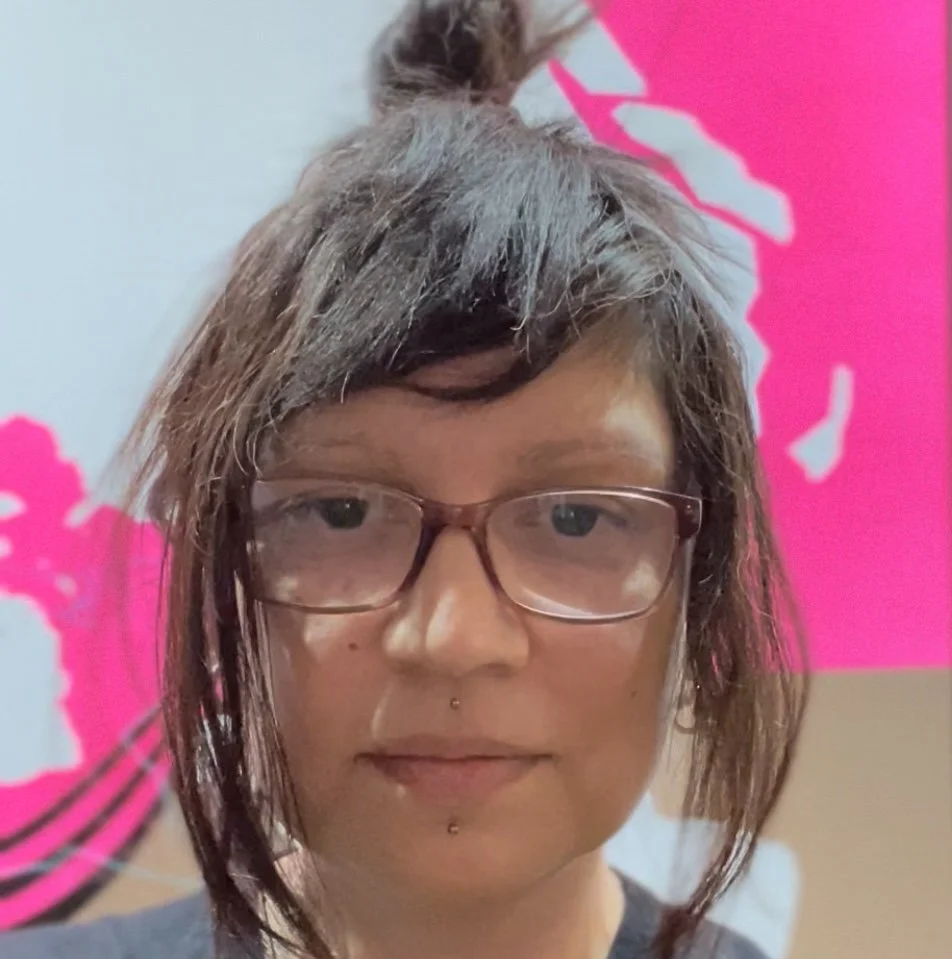
Rachel Uwa
Artist, Educator
Rachel Uwa is an artist and educator with a background in audio engineering and visual effects. She founded the School of Machines, Making & Make-Believe in Berlin, Germany in 2014, an independent school hovering at the intersection of art, technology, design, and human connection. Rachel specializes in working with communities and through her work aims to make the technical sector more diverse and inclusive. She uses technology as a catalyst to encourage others to become more critically-minded, and more deeply engaged with their surroundings and with themselves.