
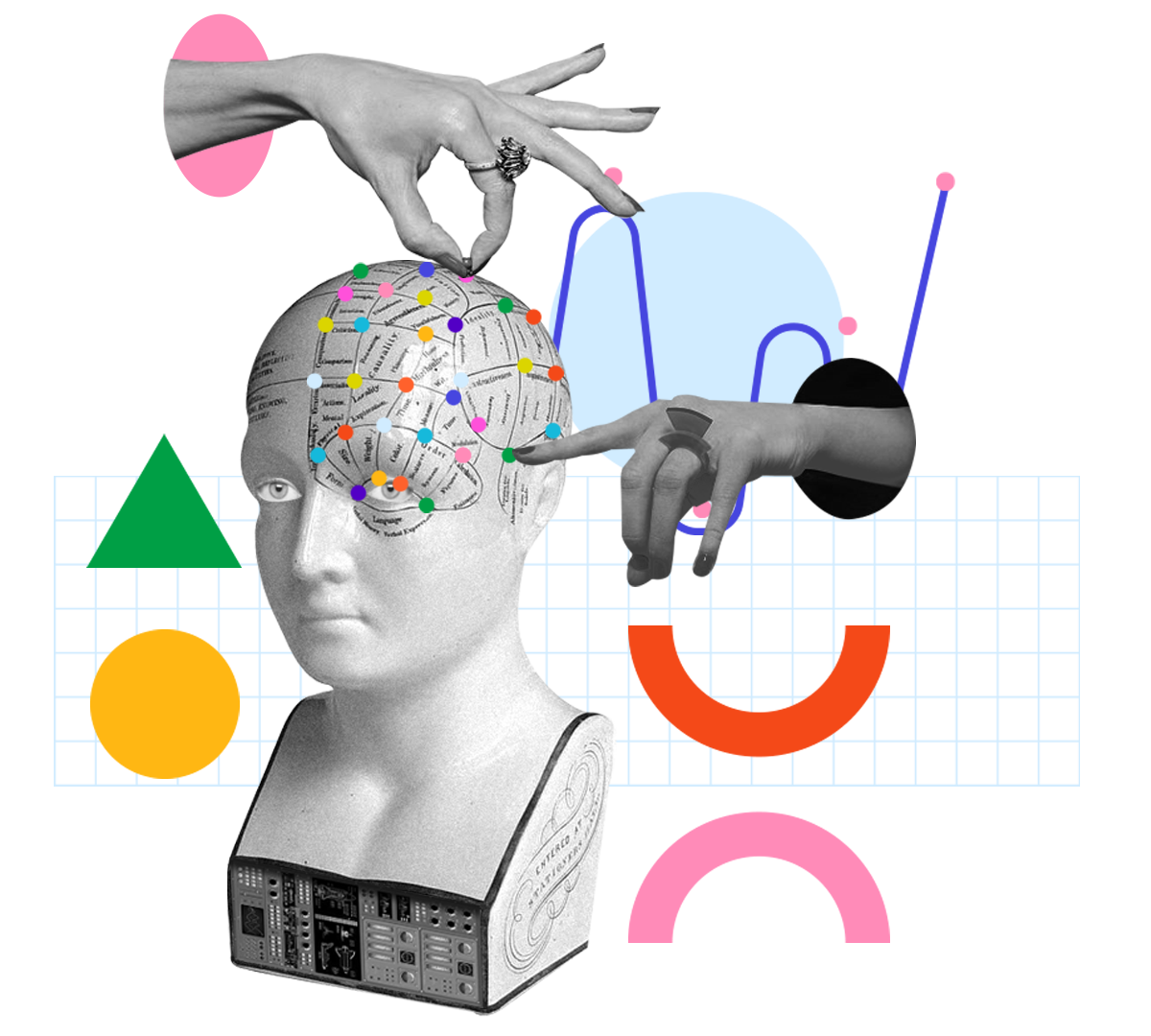
performative media
AS ART PRACTICE, RESEARCH, AND PUBLIC ACTION
How can we
collectively embody new worlds through deeper understanding of dramaturgy and digital tools?
• 3. August - 28. August
• Based in Berlin, Germany
• Four weeks, full-time
• Small class of participants
• One-month residency following program completion
• See summer program brochure
Artist / Student (Full Time)
€2225
Freelancer
€2395
Professional
€2525
APPLY BELOW!
course
description
This is a practice-based course that explores the intersection of the physical body and real-time audio-visual media. In a world where our sense of meaning is increasingly fragmented by a flood of digital content, this program reframes performance not as a spectacle, but as a vital form of public action and a tool for reconnection. By placing the human body at the center of immersive, real-time environments, we will investigate how we have shifted from "reading" the world to "sensing" it, and explore how we can reclaim agency in both digital and physical spaces.
Over the duration of the course, you will learn to build your own audiovisual performances using tools like TouchDesigner, Ableton, and MadMapper. More importantly, you will learn to use these technologies as an extension of your own physical expression. Through a combination of mindfulness exercises, technical workshops, and public experiments, you will develop the skills to create work that moves beyond the gallery and into the world. The program culminates in a final public performance where you will translate your conceptual research into a live, mediated experience.
We are living through a period where traditional frameworks for making sense of the world are collapsing under the weight of information. We are constantly consuming, but struggling to find meaning. This constant digital saturation disconnects us from our physical selves and each other, eroding our ability to form community and find grounding. This course is a direct response to this condition. It posits that the physical body, often neglected in our digital lives, is the very tool we need to navigate and make sense of this new reality. By using analog and digital tools to reconnect with our bodies through performance and mindfulness, we can begin to process this sensory overload and rebuild the frameworks for shared meaning.
This class treats art not as a self-referential act, but as a meaningful public action. We want to challenge ourselves to move beyond the "safe" spaces of galleries and the insularity of the art world, where we risk turning important social discourse into performative intellectualism.
Instead, we will explore how performance can function as a "rehearsal for reality"—a way to practice vulnerability, test ideas, and build confidence that translates directly into the "unprotected, uncensored" public sphere. The question at the heart of this course is: how can we use our artistic practice to meaningfully engage with the world, support social movements, and build genuine community? By learning to modulate the risk and vulnerability of our performances—from a studio experiment to a public intervention—we will learn how to step out of our comfort zones and make art that truly matters, moving from passive sensing to active, meaningful creation.
in this program you’ll
build time-based performative and real-time media environments through
learning the fundamentals of a visual programming environment
discovering core principles of visual storytelling
using light, visuals, and compositional elements
creating composition through dramaturgy
experiment with presenting your work in various kinds of public settings
do hands-on collaborative group work
have opportunities for introspection and self-reflection with others
gain knowledge around professional development for artists and creatives
engage in critical and conceptual development of projects for performative showcase at program’s end
get to know a variety of guest speakers with varying perspectives and relevant practices will lead workshops on critical tools and technologies
engage with the local network through weekly potlucks and other events
get to know an amazing network and community of like-minded creative beings and potential future collaborators
course outline
Week 1: Intros and Bonding :)
We begin focusing on building a collaborative foundation, as participants get to know each other, share their motivations and past work. In the first week, the core themes of the course, such as dramaturgy, performance, composition, and the relationship between public and private spaces will be introduced through texts, other media, and as playful hands-on experimentation.
Week 2: Practice, Technical Foundations, Public Art
The second week establishes the conceptual and technical groundwork for real-time media creation. Through collaborative, hands-on exercises, students learn the fundamentals of building compositions in TouchDesigner. We will explore the meaning and significance a media performance acquires through being brought into dialogue with the audience inquiring into various questions including: How can performance practice hold space for grief or joy, bring about real healing, mobilizing, or disruption? What makes a performer a responsible, attentive, caring and confident guide through the journey of the piece? How can media tools be a facilitator of these
processes rather than a source of alienation?
Week 3: Site Visits, Guest Talks, Creative Exercises
In week three, guest instructors will join us to cover advanced topics in media creation using TouchDesigner.
Participants will engage in creative exercises to put into practice what they have been learning in previous weeks, creating more formalized collaborative works with intentional prompts from each instructor.
Additionally, participants will have the opportunity to level up their understanding of what it means to be a professional artist through a Professional Development for Artists workshop.
Week 4: Exhibition preparations
The final week is dedicated to synthesis and presentation. With mentorship and technical support, participants finalize their projects, translating their experiments and ideas into cohesive pieces. The course culminates in the documentation and public presentation of their works, showcasing the unique real-time A/V narratives and installations they have developed.
who is this program for?
The course is for artists, designers, performers, scenographers, activists, those with a keen interest in public art, and all people interested in connecting movement, critical perspectives, storytelling, and analogue and digital media tools for performance.
People interested in project-based, hands-on learning and who have been searching for a community and structure to bring their ideas to life are highly encouraged to apply. No prior experience necessary.
about the after-program residency
After completion of the four-week full-time program, students are welcome to stay as resident artists at Make-Believe Studio, located on the 5th floor of ACUD, for one month. The idea of this residency is to encourage students to put newfound skills into practice or take time to learn something new independently. While there is no specific learning support during this residency period, you will have access to tools. Additionally, there is always a possibility to connect and continue learning with the members and other residents of the studio.
about the scholarship
APPLICATIONS CLOSED.
For each of our summer programs we are offering two artist-residency spots for local Berlin artists with a relevant art practice along the lines of course topics. This residency offers a free spot in this summer program, plus a one-month membership to Make-Believe Studio and the opportunity to present your work to the public at the end of the residency. In exchange, residents agree to offer a skill-sharing workshop for program participants during the initial four-week program.
Women, BIPOC, LGBTQIA+ and others from under-represented communities in the art and tech fields encouraged to apply!
guest instructors
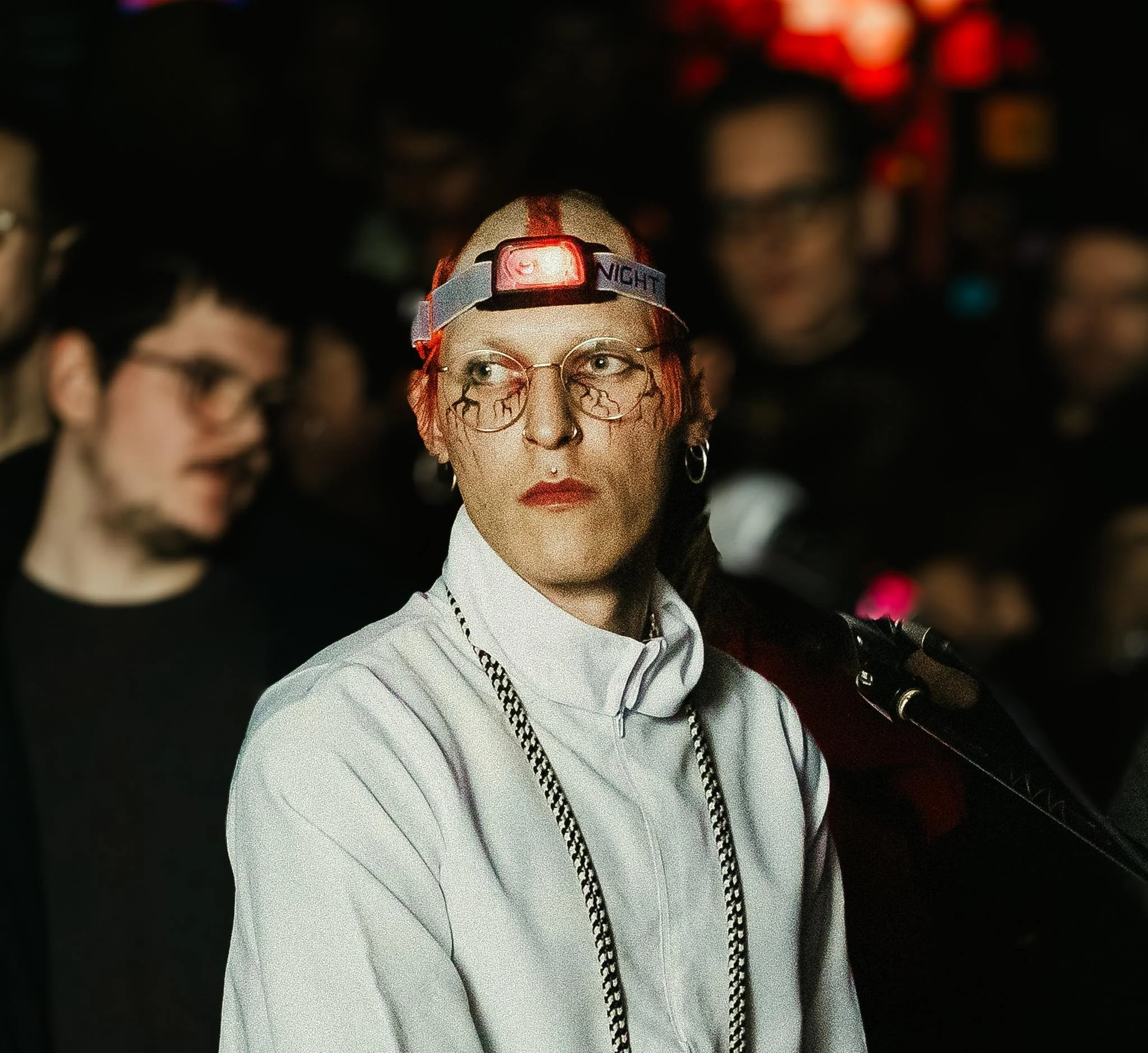
sasha df / abstraqt
multimedia artist
sasha (they / it) is a multimedia artist, community organizer, curator and educator. In their practice, they explore what makes immersive multimedia environments feel coherent and organic and how art spaces can provide a platform for meaningful activism, resistance and solidarity-building. With their collective Smooth Transitions they uncover new aesthetic, political, and spiritual dimensions of technology. sasha is also a resident of 90mil, a temporary multidisciplinary community space in the heart of Berlin. They’ve taught and ran creative workshops at 90mil Art School, Catalyst, New York University and filmArche.
Helin Ulas
Visual Artist, Designer and Educator
Helin Ulas creates networked installations and performances blending fictional narratives of machines and organics, while her research explores socio-political changes, cultural memory, and ecological perspectives. Ulas explores community-based practices through her research, artworks, and teaching.
Ulas serves as a lecturer and researcher in the Digital Arts Department at HfG Karlsruhe, focusing on digital cultures, creative computation, and ecological themes, and also guest lectures at institutions like NYU's IMA Low-Res program.
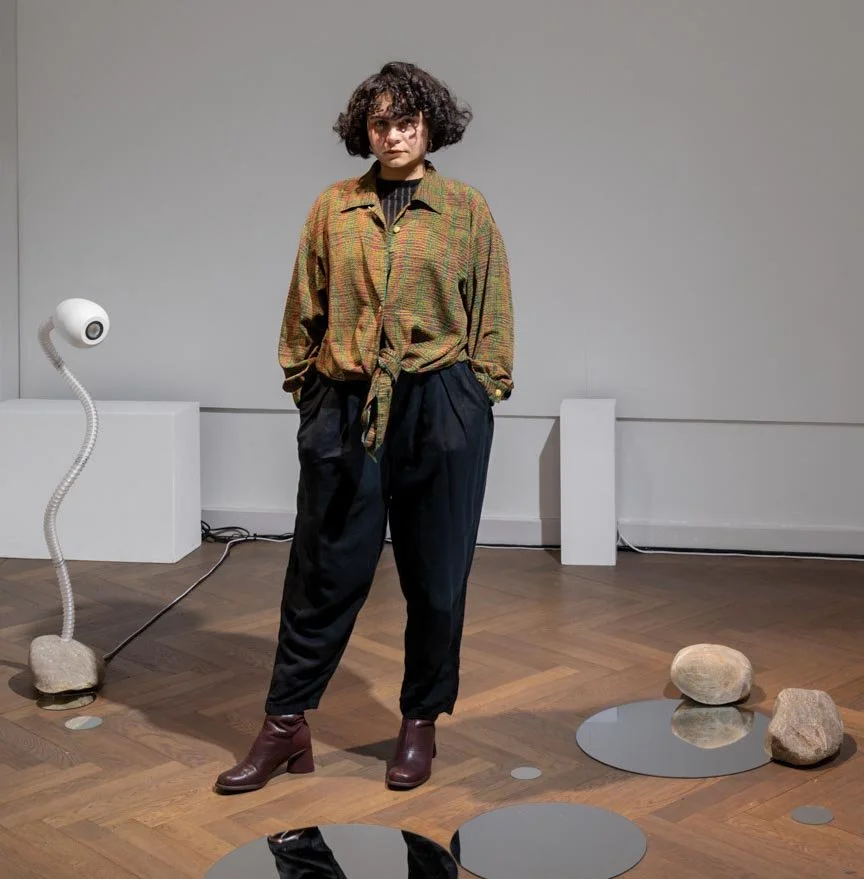
Photo credit @GloriaJurado
program facilitator
Rachel Uwa
Artist, Educator
Rachel Uwa is an artist and educator with a background in audio engineering and visual effects. She founded the School of Machines, Making & Make-Believe in Berlin, Germany in 2014, an independent school hovering at the intersection of art, technology, design, and human connection. Rachel specializes in working with communities and through her work aims to make the technical sector more diverse and inclusive. She uses technology as a catalyst to encourage others to become more critically-minded, and more deeply engaged with their surroundings and with themselves.
Program Application Form
Thanks for your interest in our Summer 2026 Program, Performative Media As Artistic Practice, Research, and Public Action! We will accept participants on a rolling basis, so we encourage you to submit your applications early. This can be especially helpful if you’re coming from out of town! After applying, we will contact you within a few days to schedule an interview.
Women and persons from under-represented communities in the tech field highly encouraged to apply! No prior experience required. This is an emerging field. Not many people have experience in these areas. We hope to help change that!
If you are a working professional, please inquire with your company about covering the costs of your tuition as part of professional development. If you are currently a university student, consider asking your school administrators if they provide funding assistance. Several past participants have received financial support in these ways. It’s definitely worth to ask. Best of luck!
We are also happy to offer payment plan options. Get in touch for more details.