
interrogating conspiracies
LEARNING TO INVESTIGATE THRU DATA AND AI
How can we
use data and AI to investigate for the greater good?
• 1. June - 26. June
• Based in Berlin, Germany
• Four weeks, full-time
• Small class of participants
Artist / Student (Full Time)
€1995 until 15. June, regular fee €2225
Freelancer
€2125 until 15. June, regular fee €2395
Professional
€2395 until 15. June, regular fee €2525
APPLY BELOW!
course
description
thoughtful description goes here lol. main hope with the class is to help give ppl tools on how to start to interrogate data on their own rather than waiting for others to create the tools that would allow them to do so.
in this program you’ll learn
basic Python (learn by doing approach)
web scraping
synthetic data generation
machine learning
visualization, and other tools for interpreting data and models
Anvil for quickly prototyping Python webapps
through hands-on individual and collaborative group work
through introspection and self-reflection with others
to engage in critical and conceptual development of projects for a group exhibition
a variety of guest speakers with varying perspectives and relevant practices will lead workshops on critical tools and technologies
gain knowledge around professional development for artists and creatives
to engage with the local network through weekly potlucks and other events
get to know an amazing network and community of like-minded creative beings and potential future collaborators
course outline
Week 1: Intros and Bonding :)
In this first week, we’ll spend time getting to know each other, sharing past work, experiences, and expectations. What brought you to this course? What is it that you hope to learn and practice? We will share ideas, examples, and resources and introduce important concepts in data science, present an alternative approach to the design and implementation of data projects,
Week 2: main workshops week1 here
The second week establishes the conceptual and technical groundwork
Week 3: main workshops week2 here
week 3 solidifies skills and starts to bring all the tools learned together in formation for a final project
Week 4: Exhibition preparations
The final week is dedicated to synthesis and presentation. With mentorship and technical support, participants finalize their projects, translating their experiments and ideas into cohesive pieces. The course culminates in the documentation and public presentation of works, showcasing the unique narratives and projects that have developed throughout the program.
who is this program for?
Anyone with a desire to explore data science concepts in the context of data activism/artivism. People looking to understand the algorithms that govern much of modern society. Artists, journalists or activists searching for ways to use data to explore an issue or further a cause. No prior experience necessary.
guest instructors
Alexandre Puttick
Data Scientist, Writer, Artist, and Educator
A Data Scientist, Writer, Artist, and Educator based in Biel, Switzerland, Alexandre Puttick is currently a post-doctoral researcher and lecturer at the Bern University of Applied Sciences (BFH) in the Applied Machine Intelligence group, working with Prof. Dr. Mascha Kurpicz-Briki. Their research focuses on fairness in AI systems and AI applications for mental health, funded by the Swiss National Science Foundation (SNSF) and an EU Horizon grant.
Recently, they completed a three-year project called Latent Spaces at the Zurich University of the Arts (ZHdK), collaborating with Prof. Dr. Felix Stalder, !Mediengruppe Bitnik, Coco Sollfrank, Shusha Niederberger, and Gordon Savatic. Latent Spaces is an artistic research project exploring ambiguities in Big Data and Data Science, also funded by the SNSF.
As a writer, Alexandre specializes in short fiction, journalism, and educational material. They are a member of Zookunft, an interdisciplinary art collective based in Zurich, where they engage in visual art, creative writing, music, dance, and performance. Additionally, they are part of the planning committee for the 8th Kaleido Retreat in Switzerland, which offers workshops and lectures at the intersection of art, science, and activism.
Meredith Thomas
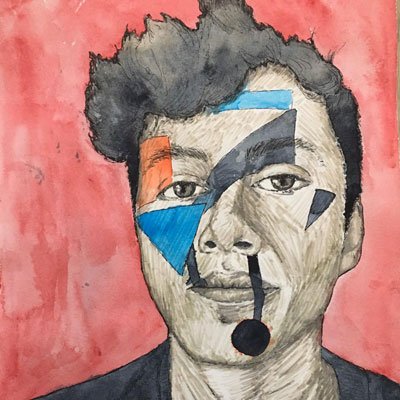
Creative Technologist
Meredith is an artist and creative technologist based in Berlin. He studied biomedical engineering and science communication at Imperial College London. After moving to Berlin he became interested in creative uses of technology. He has worked as a programmer and an artist to create transmedia experiences in virtual reality, for multimedia installations and for the stage. His work focuses in particular on novel uses of machine learning in creative domains and critiquing the broader technological and cultural manifestations of artificial intelligence.

program facilitator
Rachel Uwa
Artist, Educator
Rachel Uwa is an artist and educator with a background in audio engineering and visual effects. She founded the School of Machines, Making & Make-Believe in Berlin, Germany in 2014, an independent school hovering at the intersection of art, technology, design, and human connection. Rachel specializes in working with communities and through her work aims to make the technical sector more diverse and inclusive. She uses technology as a catalyst to encourage others to become more critically-minded, and more deeply engaged with their surroundings and with themselves.
Program Application Form
Thanks for your interest in our Summer 2026 Program! We will accept participants on a rolling basis, so we encourage you to submit your applications early. After applying, we will contact you within a few days to schedule an interview.
Women and persons from under-represented communities in the tech field highly encouraged to apply! No prior experience required. This is an emerging field. Not many people have experience in these areas. We hope to help change that!
Please note: We are currently self-funded and do not have the ability to provide scholarships at this time.
If you are a working professional, please inquire with your company about covering the costs of your tuition as part of professional development. If you are currently a university student, consider asking your school administrators if they provide funding assistance. Several past participants have received financial support in these ways. Best of luck!