

data cyborg stories
INVESTIGATIVE STORYTELLING FOR LIBERATION USING DATA AND AI
How can artists, activists, and concerned citizens investigate power through data—and transform hidden information into public truth?
• 1. June - 26. June
• Based in Berlin, Germany
• Four weeks, full-time
• Small class of participants
• One-month residency following program completion
• See summer program brochure
Artist / Student (Full Time)
€1995 until 14. May, regular fee €2225
Freelancer
€2125 until 14. May, regular fee €2395
Professional
€2395 until 14. May, regular fee €2525
APPLY BELOW!
course
description
From whistleblowing platforms to grassroots open-source investigations, we have seen how access to data can shift public understanding and challenge dominant narratives. Yet today, the infrastructures of data extraction, AI, and algorithmic governance have become more opaque, more complex, and more difficult to interrogate.
Data Cyborg Stories is a one-month full-time program that explores how artists, activists, and concerned citizens can use data and AI as tools for investigation, interpretation, and public storytelling. Inspired by traditions of whistleblowing, citizen-led journalism, and critical art practice, the course focuses on uncovering hidden structures and transforming them into works that can be experienced, questioned, and shared in public space.
Rather than treating data as neutral truth, we approach it as evidence: partial, situated, and shaped by systems of power. Every dataset contains absences. Every method of collection reflects a perspective. Every model produces a version of reality. The task is not simply to analyze data, but to extract meaningful narratives responsibly and translate them into forms that make sense beyond technical contexts.
The course is organized around the practical workflow of an investigative creative practice: finding a question, gathering traces, structuring and interrogating data, extracting patterns, and translating those patterns into public form. Participants will learn hands-on methods in Python, web scraping, data cleaning, visualization, AI-assisted research, and rapid prototyping, while developing their own exhibition-oriented projects.
The conceptual thread tying the course together is the idea of the data cyborg: neither detached analyst nor passive subject of data extraction, but a situated investigator working across human intuition, technical systems, embodied knowledge, and collective sense-making. Through this lens, participants will explore how data can be used not only to measure and classify, but to expose, connect, witness, and imagine otherwise.
Throughout the month, participants will develop a project that culminates in a public exhibition, taking the form of an installation, interface, visual system, performative lecture, or other spatially situated work. The goal is not only to understand data systems, but to intervene in how knowledge is produced, shared, and felt.
in this program you’ll learn
how to frame an investigative question using data
how to collect, scrape, and structure research material
how to work with Python through hands-on practice
how to clean, explore, and visualize data
how to setup Open Claw on raspberry pi
how to use AI and retrieval systems to interrogate archives and datasets
how to extract patterns and develop narratives responsibly
how to prototype public-facing works using data and AI
how to translate research into an artwork, interface, installation, or exhibition piece
how to situate technical methods within feminist, eco-feminist, and critical design perspectives
an amazing network and community of like-minded creative beings and potential future collaborators through weekly potlucks and other events
course outline
Each week consists of:
Part 1: Concepts, case studies, and technical workshops
Part 2: Studio practice, critique, and project development
The program is intensive and project-driven, with continuous support from all instructors.
Week 1: Framing the question — data, narrative, and investigative art
The first week is about getting to know one another, sharing backgrounds and interests, and identifying the issues, obsessions, and publics that matter to each participant. We introduce the course’s core flow — trace, structure, narrative, form — alongside examples from data art, activist research, and citizen-led investigative practices.
Participants begin thinking not in terms of “datasets” or “tools,” but in terms of investigative questions: What do I want to uncover? What system, structure, or narrative do I want to challenge or reveal?
We also introduce the idea of the data cyborg as a figure for hybrid inquiry: part researcher, part storyteller, part interface designer, part witness, part collective voice.
We look at examples from whistleblowing, investigative journalism, and data-driven art, examining how raw information becomes public knowledge.
Topics:
data as evidence, investigative art, narrative construction, situated knowledge, data feminism, cyborg theory, exhibition as inquiry
Practical skills:
Python basics, working with datasets, exploratory analysis, framing a research question
Week 2: Gathering traces — collection, scraping, and building an archive
In the second week, participants learn how to scrape, gather, and organize material while critically examining what is included, excluded, or distorted. This includes scraping, collecting open data, assembling textual and visual archives, and discussing the politics of extraction and evidence. We focus on practical methods for turning raw materials into something searchable, comparable, and investigable.
This week emphasizes that collection is already interpretation. Participants think carefully about what kind of archive they are building, what biases it inherits, and what kinds of claims it may or may not support.
Topics:
web scraping, open-source investigation, dataset construction, metadata, proxies, bias, ethics of data collection, archives as narrative infrastructure
Practical skills:
web scraping, cleaning data, joining sources, organizing research corpora, synthetic data where needed, documenting methods
Week 3: Interrogating the material — pattern finding, AI-assisted inquiry, and interpretation
Week three focuses on extracting signals and narratives from the collected material. Using visualization, basic machine learning, and AI-assisted tools, we explore how patterns, anomalies, and relationships emerge.
The emphasis here is not on prediction for its own sake, but on using computational methods as tools for investigation and interpretation. We ask: What patterns appear? Which are meaningful, and which are artifacts of the method? What can be responsibly inferred? How do multiple interpretations coexist?
Topics:
pattern recognition, interpretation vs prediction, AI as research assistant, RAG systems, multimodal inquiry, same data / many narratives, model bias, responsible inference
Practical skills:
visualization, simple ML workflows, multimodal RAG, custom agents for navigating research materials
Week 4: From narrative to public form
The final week is dedicated to translating investigations into exhibition-ready works. Participants decide how their findings should be experienced in space.
Possible formats include:
installations
screen-based works
interactive interfaces
data sculptures
video essays
performative lectures
participatory or investigative setups
The focus is on translation: how to make a complex investigation legible, affective, and responsible in public.
Participants refine both content and form with mentorship from all three instructors, preparing their projects for exhibition and documentation.
Topics:
exhibition design, interface as storytelling, visualization as rhetoric, audience, ethics of display, documentation
Practical skills:
rapid prototyping, visual and spatial presentation, narrative sequencing
Output:
final project ready for exhibition
final exhibition
The course culminates in a public presentation or exhibition of participant projects.
DATA CYBORGS: traces, patterns, counter-narratives
A group exhibition of investigative art and public research projects exploring how data can be used to reveal hidden systems, challenge dominant accounts, and create new forms of collective sense-making.
who is this program for?
This program is for artists, journalists, activists, designers, researchers, and concerned citizens who want to use data and AI to investigate issues they care about and transform those investigations into public-facing works.
It is especially for people who:
want practical tools for researching with data
are interested in artistic or activist uses of AI
want to create meaningful work for public exhibition
are drawn to investigative storytelling, critical technology, and collective learning
want to understand how narrative is constructed through data, not just extracted from it
No prior experience is necessary. Participants will be supported in developing both technical confidence and conceptual clarity.
about the after-program residency
After completion of the four-week full-time program, students are welcome to stay as resident artists at Make-Believe Studio, located on the 5th floor of ACUD, for one month. The idea of this residency is to encourage students to put newfound skills into practice or take time to learn something new independently. While there is no specific learning support during this residency period, you will have access to tools. Additionally, there is always a possibility to connect and continue learning with the members and other residents of the studio.
about the scholarship
APPLICATIONS CLOSED.
For each of our summer programs we are offering two artist-residency spots for local Berlin artists with a relevant art practice along the lines of course topics. This residency offers a free spot in this summer program, plus a one-month membership to Make-Believe Studio and the opportunity to present your work to the public at the end of the residency. In exchange, residents agree to offer a skill-sharing workshop for program participants during the initial four-week program.
Women, BIPOC, LGBTQIA+ and others from under-represented communities in the art and tech fields encouraged to apply!
instructors
Alexandre Puttick
Data Scientist, Writer, Artist, and Educator
Alexandre Puttick is a data scientist, writer, artist, and educator based in Biel, Switzerland. They are currently a postdoctoral researcher and lecturer at the Bern University of Applied Sciences in the Applied Machine Intelligence group, where their work focuses on fairness in AI systems and AI applications for mental health. They previously completed the artistic research project Latent Spaces at Zurich University of the Arts, exploring ambiguities in big data and data science. Alexandre brings together mathematics, machine learning, artistic research, and critical pedagogy, with a focus on data storytelling, sociotechnical context, and liberatory approaches to AI.
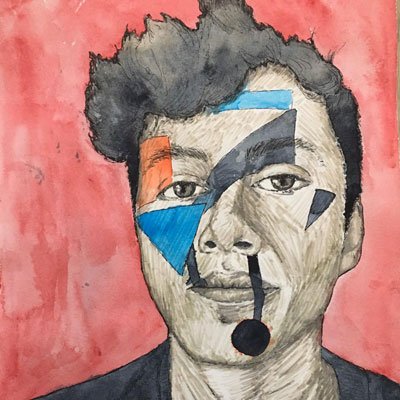
Meredith Thomas
Creative Technologist
Meredith is an artist and creative technologist based in Berlin. He studied biomedical engineering and science communication at Imperial College London. After moving to Berlin he became interested in creative uses of technology. He has worked as a programmer and an artist to create transmedia experiences in virtual reality, for multimedia installations and for the stage. His work focuses in particular on novel uses of machine learning in creative domains and critiquing the broader technological and cultural manifestations of artificial intelligence.

program facilitator
Rachel Uwa
Artist, Educator
Rachel Uwa is an artist and educator with a background in audio engineering and visual effects. She founded the School of Machines, Making & Make-Believe in Berlin, Germany in 2014, an independent school hovering at the intersection of art, technology, design, and human connection. Rachel specializes in working with communities and through her work aims to make the technical sector more diverse and inclusive. She uses technology as a catalyst to encourage others to become more critically-minded, and more deeply engaged with their surroundings and with themselves.

Program Application Form
Thanks for your interest in our Summer 2026 Program Data Cyborg Stories: Investigative Storytelling for Liberation using Data and AI! We will accept participants on a rolling basis, so we encourage you to submit your applications early. After applying, we will contact you within a few days to schedule an interview.
Women and persons from under-represented communities in the tech field highly encouraged to apply! No prior experience required. This is an emerging field. Not many people have experience in these areas. We hope to help change that!
If you are a working professional, please inquire with your company about covering the costs of your tuition as part of professional development. If you are currently a university student, consider asking your school administrators if they provide funding assistance. Several past participants have received financial support in these ways. It’s definitely worth to ask. Best of luck!
We are also happy to offer payment plan options. Get in touch for more details.