
dramaturgy and touchdesigner
PERFORMANCE AND ARTISTIC INTERVENTIONS
How can we
embody new worlds through deeper understanding of dramaturgy and digital tools?
• 3. August - 28. August
• Based in Berlin, Germany
• Four weeks, full-time
• Small class of participants
Artist / Student (Full Time)
€1995 until 15. June, regular fee €2225
Freelancer
€2125 until 15. June, regular fee €2395
Professional
€2395 until 15. June, regular fee €2525
APPLY BELOW!
course
description
This course explores audiovisual (A/V) spaces, using the body as a central motif for creative exploration. Students will be introduced to dramaturgy for real-time media spaces through project-based learning, site visits, and in-class exercises. We will use TouchDesigner, a visual programming environment that introduces craft tools for A/V performances and artistic expression, as a tool. The course will explore methods to critically engage with visual programming, audiovisual spaces, and approaches for creating immersive environments for real-time media spaces. The course is geared towards real-time A/V media spaces and performances created by the participants, showcasing their explorations and experiments.
This real-time A/V oriented course requires active engagement in programming and creative creation, both inside and outside the classroom. As the course progresses, students are expected to document their experimental work and integrate their findings into TouchDesigner. In-class sessions will focus on building conceptual understanding, with practical examples and exercises translating ideas into practice-based applications.
This course uses media theory to connect digital and physical spaces, using the human body as the central anchor. We treat the body as an interface or "apparatus," a tool to help us navigate and make sense of the overwhelming "infinity of content" in our digital world. We will explore how to respond to this theoretical research by learning to create a composition and dramaturgy in real-time media spaces. You will translate your artistic research into practical parameters within a real-time media environment through TouchDesigner. We will question the tools real-time media spaces offer for bringing the abstracted ideas of theory into practice.
Outside the classroom, participants are expected to develop their technical skills through additional video tutorials, engage in additional experimentation, and reflect on their in-class learnings.
By the end of the course, you will have gained a deeper appreciation of the relationship between technology and the body. You will have developed a better understanding of how technology can enhance self-expression by creating a feedback loop between our bodies and the machine. Finally, you will have developed conceptual and technical skills to create A/V performative narratives and installations that showcase your work.
in this program you’ll
learn the fundamentals of a visual programming environment geared towards a performative audio-visual and real-time media environment
discover core principles of visual storytelling within a real-time media environment
use light, visuals, and compositional elements to build time-based performative and real-time media environments
create a composition and a dramaturgy for a time-based performative piece.
do hands-on collaborative group work
have opportunities for introspection and self-reflection with others
engage in critical and conceptual development of projects for a group exhibition
get to know a variety of guest speakers with varying perspectives and relevant practices will lead workshops on critical tools and technologies
gain knowledge around professional development for artists and creatives
engage with the local network through weekly potlucks and other events
get to know an amazing network and community of like-minded creative beings and potential future collaborators
course outline
Week 1: Intros and Bonding :)
We begin focusing on building a collaborative foundation, as participants get to know each other, share their motivations and past work, and engage in playful experiments with the core themes of dramaturgy, performance, interactivity, and storytelling, all while getting a first look at the TouchDesigner tools.
Week 2: Foundations of Composition & Dramaturgy
The second week establishes the conceptual and technical groundwork for real-time media creation. Participants explore the concept of "the body" as an interface and are introduced to the principles of New Media Dramaturgy. Through collaborative, hands-on exercises, students learn the fundamentals of building compositions in TouchDesigner, investigating how to control and animate visual narratives. An artist talk from a professional in the field offers real-world insights into creating immersive media environments, bridging theory with practice.
Week 3: Interactivity, Space & Multi-Media
uilding on foundational skills, the third week expands the creative palette into the physical and spatial realm. Participants engage in workshops on incorporating movement and interactive tools like sensors, exploring how a performer's presence transforms a media space. The week also delves into multi-channel video formats and the use of projection as a sculptural light source, challenging students to consider how spatial and architectural elements can generate and enhance storytelling.
Week 4: Exhibition preparations
The final week is dedicated to synthesis and presentation. With mentorship and technical support, participants finalize their projects, translating their experiments and ideas into cohesive pieces. The course culminates in the documentation and public presentation of their works, showcasing the unique real-time A/V narratives and installations they have developed.
who is this program for?
This course is for people interested in gender studies, queer studies, sociology, psychology, media and technology studies. The course could also be of interest to individuals who are passionate about issues related to gender, sexuality and physical representation, and exploring the ways in which technology can impact our understanding and experience of these topics. Additionally, this is for anyone interested to gain an understanding of TouchDesigner for real-time video/visual manipulation.
guest instructors
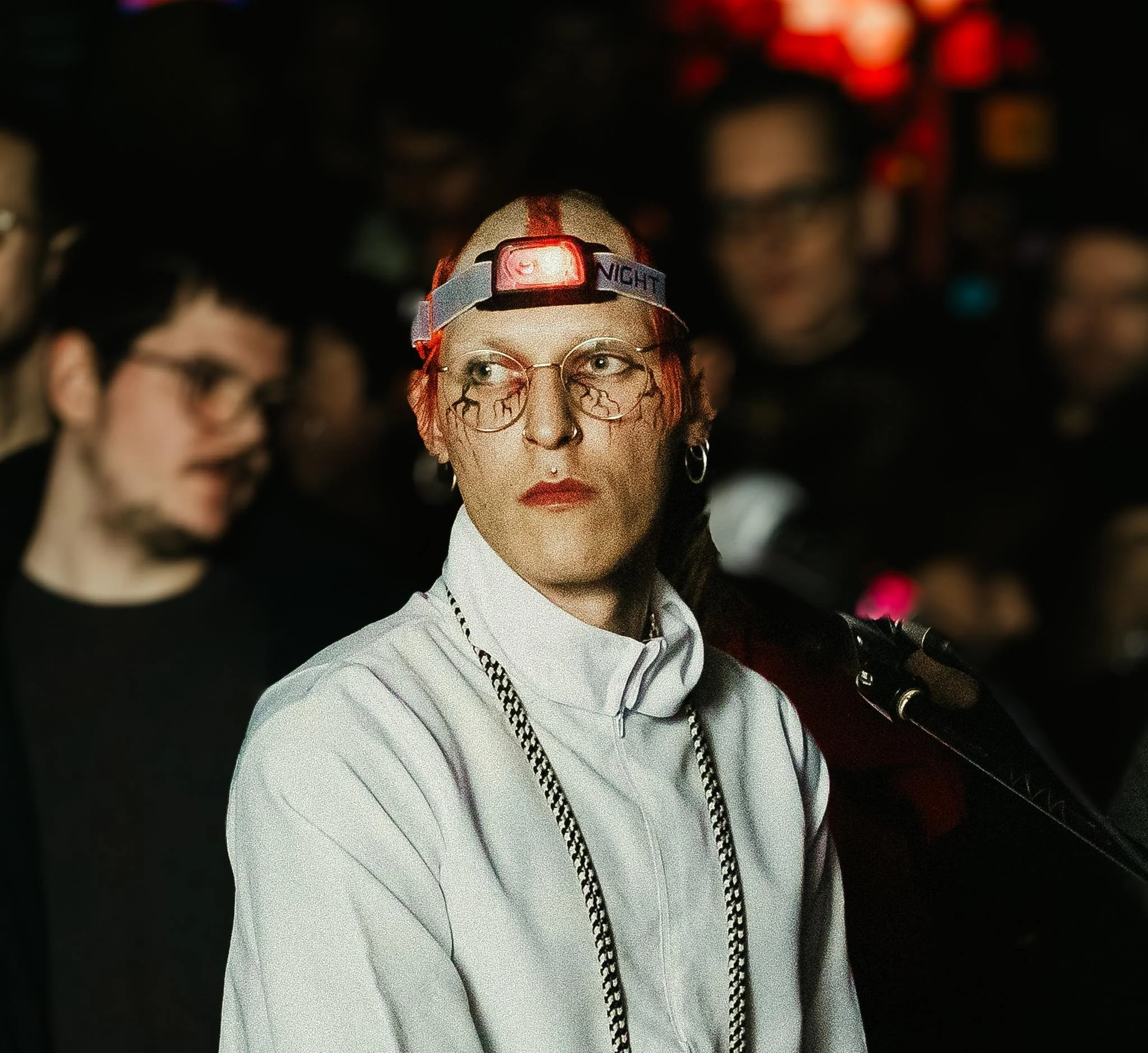
sasha df / abstraqt
multimedia artist
sasha (they / it) is a multimedia artist, community organizer, curator and educator. In their practice, they explore what makes immersive multimedia environments feel coherent and organic and how art spaces can provide a platform for meaningful activism, resistance and solidarity-building. With their collective Smooth Transitions they uncover new aesthetic, political, and spiritual dimensions of technology. sasha is also a resident of 90mil, a temporary multidisciplinary community space in the heart of Berlin. They’ve taught and ran creative workshops at 90mil Art School, Catalyst, New York University and filmArche.
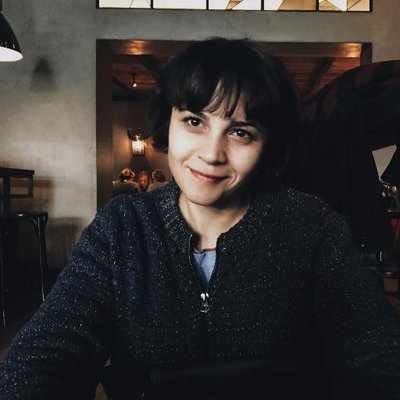
Helin Ulas
Visual Artist, Designer and Educator
Helin Ulas is a Berlin-based visual artist and a designer from Turkey(b. 1990). Her artistic practice involves using technology as a medium to create both visual and research-based projects.
She is also one of the founding members of the media arts collective Automaton. They concentrate on creating platforms where they share their experiences and invite others to play and collaborate on various projects, researching on social impacts of technology.
Having focused her research on the spatial representations of Machine Learning, Helin uses light and visual media to create interactive, immersive experiences. Working with generative tools, she focuses on using randomness and manipulating data through visual means.
Helin is teaching Realtime Media as a creative expression tool at HfG Karlsruhe. Her work has been exhibited through various outlets, including D’haus(2022), Lumen Prize(2020), Sonar+D (2019), Ars Electronica(2021-2018), and Wisp Lab(2019).
program facilitator
Rachel Uwa
Artist, Educator
Rachel Uwa is an artist and educator with a background in audio engineering and visual effects. She founded the School of Machines, Making & Make-Believe in Berlin, Germany in 2014, an independent school hovering at the intersection of art, technology, design, and human connection. Rachel specializes in working with communities and through her work aims to make the technical sector more diverse and inclusive. She uses technology as a catalyst to encourage others to become more critically-minded, and more deeply engaged with their surroundings and with themselves.
Program Application Form
Thanks for your interest in our Summer 2026 Program! We will accept participants on a rolling basis, so we encourage you to submit your applications early. After applying, we will contact you within a few days to schedule an interview.
Women and persons from under-represented communities in the tech field highly encouraged to apply! No prior experience required. This is an emerging field. Not many people have experience in these areas. We hope to help change that!
Please note: We are currently self-funded and do not have the ability to provide scholarships at this time.
If you are a working professional, please inquire with your company about covering the costs of your tuition as part of professional development. If you are currently a university student, consider asking your school administrators if they provide funding assistance. Several past participants have received financial support in these ways. Best of luck!