

data stories
WORLDBUILDING FOR RECLAIMING COLLECTIVE AGENCY
How can artists, technologists, activists, and concerned citizens use practical tools to investigate power, create counter-narratives, expose hidden systems, and build new forms of collective attention that can reshape how we interpret the world?
• 31. August - 25. September
• Based in Berlin, Germany
• Four weeks, full-time (10am - 4pm, Mon. - Fri.)
• Small class of participants
• One-month residency following program completion
Artist / Student (Full Time)*
€2225
Freelancer*
€2395
Professional*
€2525
*Payment plans available
APPLY BELOW!
course
description
We live among systems that continuously collect, classify, predict, and narrate the world around us. Data-driven models decide what we see, predict what we might do, and shape how institutions respond to us. These systems often present themselves as objective, efficient, and inevitable, while hiding the values, assumptions, omissions, and power relations embedded in their design. Models do not simply describe the world: they help produce it.
Data Stories is a one-month full-time program exploring data and AI as materials, tools, and prosthetics for investigative storytelling, artistic research, and public exhibition. Inspired by whistleblowing and citizen-led investigation, and drawing on themes from data feminism, cyborg theory, and eco-feminist thought, the course combines technical workshops, critical discussions, guest sessions, peer exchange, and project development for a final group exhibition.
Participants will begin with a question, tension, or system they want to investigate. They will gather traces such as datasets, archives, testimonies, images, sensor data, scraped materials and other digital residues, and learn how to organize and interpret them using practical tools such as Python, web scraping, visualization, machine learning, AI-assisted research, RAGs and multimodal systems.
Instead of trying to find an answer to our questions, we will emphasize ambiguity. Students will ask themselves: What stories does this data tell? What does it obscure? What happens if we visualize it differently, model it differently, or place it in dialogue with memory and lived experience?
Each participant provisions their own private virtual machine and deploys a personal AI research assistant; a self-hosted agent that lives on their own private server, shaped by its memory, its permissions, and the questions it is asked. These agents become both tools and subjects of critique, helping us surface narratives that might otherwise remain hidden.
Far from being a detached analyst or a passive subject of data extraction, we will actively look into how technical systems can be redirected away from surveillance, optimization, and control - towards collective agency, togetherness, enhanced creativity and liberation. In doing so, we will bring to light how biases instilled in datasets alter the informational landscape we inhabit and, hence, the humans we are. We will, more importantly, explore ways to counter-balance mainstream uses of data towards a more empathetic worldbuilding.
The final exhibition will aim to create a public encounter where data is felt, questioned, and collectively discussed. We welcome installations, performances, talks, screenings, data sculptures, participatory works, speculative archives, and other spatially situated formats.
in this program you’ll learn
how to frame a data-driven artistic or investigative question
how to collect, scrape, clean, and structure research material
how to work with Python and notebooks through practical exercises
how to explore datasets through visualization and analysis
how to provision and secure your own research infrastructure (VPS + Tailscale + self-hosted AI)
how to use AI tools to probe archives, images, texts, and other materials
how to build retrieval-augmented and multimodal research workflows using AI agents, memory systems, and model context protocols
how models, metrics, categories, and interfaces shape narratives
how to document the limits and assumptions of a dataset
how to turn ambiguity into a creative and ethical resource
how to translate data research into installations, performances, interfaces, talks, or exhibition works
how to connect technical practice to feminist, eco-feminist, cyborg, and artistic research perspectives
case studies
The course is built around three main case studies as practical and conceptual guides:
Black Planetarium — Uncharted: Anthologies Across the Atlantic brings together ancestral knowledge, cartography, African writing systems, machine vision, speculative storytelling, performance, and spatial-sonic computation. It expands data practice beyond Western categories of evidence and into embodied, decolonial, and cosmological forms of knowledge.
Data Against Feminicide shows how feminist data activists, artists, journalists, communities, and researchers collect and communicate data about gender-related violence. It foregrounds participatory research, collective evidence-making, accountability, and the politics of care in data work.
Synthetic Memories explores how generative AI can reconstruct personal memories that were never photographed or are at risk of being lost. It opens questions around memory, identity, care, imagination, and the ethics of synthetic images.
PLEASE NOTE: The case studies are selected to provide critical socio-technical context for the data science concepts we will explore. The cases also demonstrate a variety of forms for data-driven narratives, with the aim of inspiring students in their own projects. Students are not restricted to these topics for their own research.
course outline
Week 1: Ambiguity, and investigative worlds
We begin by getting to know one another, sharing backgrounds, past work, and identifying the questions participants want to explore.
The three case studies frame different ways of turning data into public meaning. Participants explore the guiding workflow:
trace → structure → interpretation → form;
and discuss data as ambiguous material rather than fixed truth. We investigate how data systems can distance bodies from experience, individuals from communities, and humans from nature. We then ask ourselves: how might artistic and activist uses of data help repair or reconfigure those relations? Value-sensitive design is introduced as a framework for connecting stakeholders, ethics, aesthetics, and technical choices.
We also lay the technical foundation blocks of our own data storyteller, learning how virtual private networks (VPNs) and virtual private servers (VPS) can empower our enquiries with accessible, secure cloud compute where we can make our own decisions about the tradeoffs between privacy, convenience and cost.
Technical skills: Python setup, working with notebooks, basic data handling, introductory visualization, value-sensitive design, VPS provisioning, Tailscale networking, accessing and syncing files, and JupyterLab deployment.
Project output: a provisioned and secured personal research server, a first project question, source map, and initial ideas for final format.
Week 2: Gathering, structuring, and exploring traces
Collecting, constructing, and organizing data. Participants learn practical methods for scraping, gathering open data, assembling text and image archives, and documenting sources, while thinking critically about access, consent, privacy, and extraction. The case studies return as examples of very different archives: sensitive and private, collective and political, ancestral and symbolic.
Each participant deploys a personal Hermes Agent instance on their VPS — a configured prosthetic shaped by its memory, its permissions, and the questions it is asked. We will also take a step back and consider the entire AI stack, from the historic origins of machine learning to the current marketised corporate hellscape of the “AI revolution”. We will see how both ideology as well as engineering has shaped the status quo.
We treat data collection as an interpretive and political act: What becomes visible? What remains missing? Who produced the data, under what conditions, and for what purpose? What do the models and AI systems developed from that data encode and represent?
Participants begin building their own working archive or dataset while exploring how different structures produce different possible readings. Participants will also begin configuring personal AI research companions connected to their
archives and datasets, experimenting with memory, retrieval, prompting, and conversational workflows as tools for organizing and navigating complex research materials.
This week also includes dedicated time for guest speakers and participant knowledge-sharing.
Technical skills: web scraping, cleaning data, organizing research corpora, joining sources, working with spreadsheets and pandas, dataset documentation, exploratory visualization, AI-assisted archive exploration, Hermes Agent installation, OpenRouter configuration, and agent memory setup.
Project output: a personalized agent connected to a working dataset, archive, or research corpus with notes on its limitations and absences; first narrative observations and emerging project direction.
Week 3: Interpretation, narrative, and project development
The focus shifts from collecting material toward developing a clear project direction. Participants use visualization, clustering, AI-assisted inquiry, retrieval systems, and custom research agents to probe their material and surface patterns, contradictions, and narrative possibilities. We delve deeper into agent design, its memory systems, self-hosting llms, retrieval, skills, and scheduling, comparing how different builds involve different compromises and affordances.
Much of the week functions as a studio environment centered on experimentation, critique, and project consultations. Another day is reserved for guest speakers and participant-led sharing.
Technical skills: data visualization, clustering, intro to machine learning, AI-assisted inquiry, multimodal workflows, AI-assisted storytelling, memory systems, model context protocols (MCPs), retrieval systems.
Project output: a narrative direction, selected interpretive method, and prototype/draft plan for the final exhibition work.
Week 4: Public form
Transforming research into public form. Participants decide how their investigation should be encountered: as an installation, interface, performance, talk, panel, participatory setup, video, archive, data sculpture, speculative map, or hybrid work. The focus is on form as part of the investigation, not just a container for results. How can a project invite reflection rather than simply deliver information? How can artistic form make data felt, questioned, and collectively discussed?
Participants refine their projects with support from the instructors, preparing both the work and its public framing.
Practical workshops: rapid prototyping, visual and spatial presentation, narrative sequencing.
Project output: an exhibition-ready work, prototype, performance, talk, or public presentation.
final event
The program culminates in a public event, a program of investigative and speculative works exploring how data and AI can reveal hidden structures, reconstruct memory, question dominant narratives, and create new ways of relating to ourselves, each other, and the more-than-human world. The event unfolds through artistic works, presentations, performances, screenings, discussions, and participatory experiences.
who is this program for?
This program is for artists, technologists, journalists, activists, designers, researchers, performers, and curious citizens who want to use data and AI as materials for inquiry, storytelling, and public art.
It is especially for people who:
want practical tools for working with data and AI
are interested in artistic, activist, or critical uses of technology
want to develop work for a public exhibition or festival-style event
are drawn to archives, memory, investigation, speculation, embodiment, and storytelling
want to better understand how narratives are constructed through data and models
want to collaborate across artistic and technical backgrounds
No prior technical experience is required. Participants with technical backgrounds will be encouraged to deepen the artistic, ethical, and political dimensions of their work, while artists and beginners will be supported in building technical confidence through hands-on practice.
about the after-program residency
After completion of the four-week full-time program, students are welcome to stay as resident artists at Make-Believe Studio, located on the 5th floor of ACUD, for one month. The idea of this residency is to encourage students to put newfound skills into practice or take time to learn something new independently. While there is no specific learning support during this residency period, you will have access to tools. Additionally, there is always a possibility to connect and continue learning with the members and other residents of the studio.
instructors
Alexandre Puttick
Data Scientist, Writer, Artist, and Educator
Alexandre Puttick is a data scientist, writer, artist, and educator based in Biel, Switzerland. They are currently a postdoctoral researcher and lecturer at the Bern University of Applied Sciences in the Applied Machine Intelligence group, where their work focuses on fairness in AI systems and AI applications for mental health. They previously completed the artistic research project Latent Spaces at Zurich University of the Arts, exploring ambiguities in big data and data science. Alexandre brings together mathematics, machine learning, artistic research, and critical pedagogy, with a focus on data storytelling, sociotechnical context, and liberatory approaches to AI.
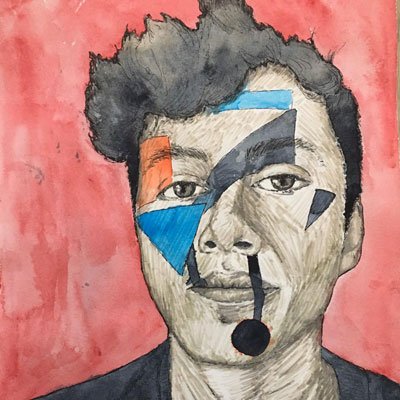
Meredith Thomas
Creative Technologist
Meredith is an artist and creative technologist based in Berlin. He studied biomedical engineering and science communication at Imperial College London. After moving to Berlin he became interested in creative uses of technology. He has worked as a programmer and an artist to create transmedia experiences in virtual reality, for multimedia installations and for the stage. His work focuses in particular on novel uses of machine learning in creative domains and critiquing the broader technological and cultural manifestations of artificial intelligence.

program facilitator
Rachel Uwa
Artist, Educator
Rachel Uwa is an artist, educator, and organiser, who curates the programs of the School of Machines, Making & Make-Believe. Her work explores the intersection of art, technology, political inquiry and human connection, creating spaces where creativity and critical engagement can shape more inclusive technological futures.

Program Application Form
Thanks for your interest in our Fall 2026 Program Data Stories: Data Worldbuilding for Reclaiming Collective Agency! We will accept participants on a rolling basis, so we encourage you to submit your applications early. After applying, we will contact you within a few days to schedule an interview.
Women and persons from under-represented communities in the tech field highly encouraged to apply! No prior experience required. This is an emerging field. Not many people have experience in these areas. We hope to help change that!
If you are a working professional, please inquire with your company about covering the costs of your tuition as part of professional development. If you are currently a university student, consider asking your school administrators if they provide funding assistance. Several past participants have received financial support in these ways. It’s definitely worth to ask. Best of luck!
We are also happy to offer payment plan options. Get in touch for more details.